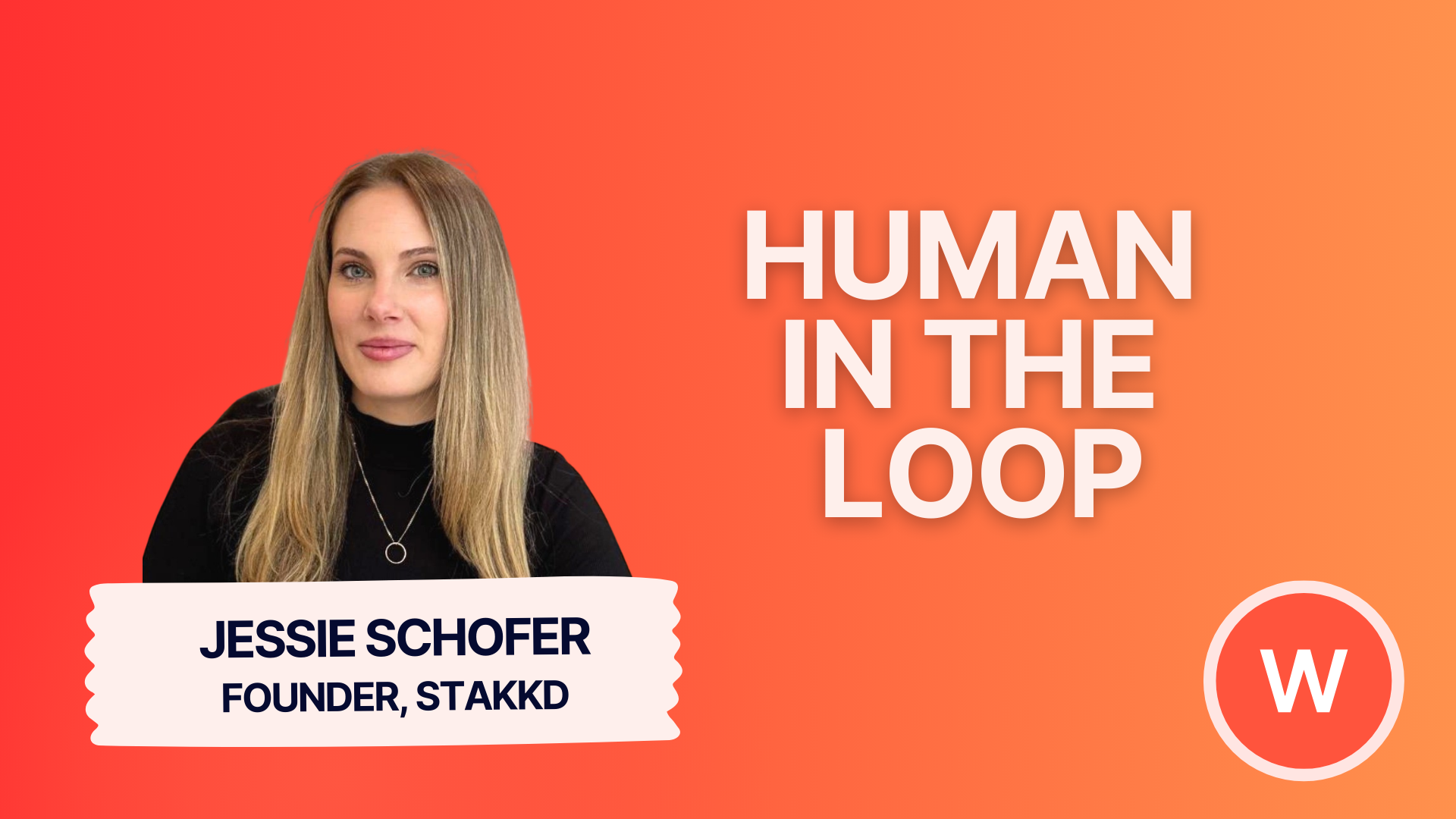
When Jessie Schofer says HR tech isn’t just a tool but the backbone of modern companies, she means it. On LinkedIn she’s known as the “queen of HR tech, calling out both bad systems and bad leadership, and sharing her vision for the future of HR. In a recent conversation with Winslow CEO and Co-founder, she went deeper, connecting her philosophy with what she’s building through Stakkd and the Human-in-the-Loop newsletter.
Here’s what stood out.
HR Debt is Real
Jessie borrows a term from engineering: tech debt. In HR, it shows up as skipped foundations—messy job titles, pay frameworks that never got set, culture that was left to chance. Early-stage companies often decide to “move fast” and throw people at problems instead of building infrastructure. But those shortcuts eventually catch up. When you’ve grown from 10 to 600 employees without setting clear levels, career frameworks, or compensation standards, every change becomes painful. Titles need to be reset, expectations need to be realigned, and leaders face a culture that feels shaky rather than solid.
Jessie is blunt: HR debt is the reason People teams are often drowning. They’re buried in admin because the right systems weren’t put in place early. And CEOs who complain about HR dysfunction are usually looking in the wrong direction. As Jessie says, “Your HR is a reflection of your CEO.” Leadership that ignores foundations creates the very problems HR is later blamed for.
HR Systems Beat More Information
On LinkedIn, Jessie often compares her own health journey to HR. She knew what to do, exercise, eat better, be consistent—but until she built the right systems, nothing changed. HR works the same way. Information is rarely the blocker. It’s the lack of systems that turns good intentions into burnout.
In our discussion, Jessie described how People teams fall into the trap of trying to do everything at once: roll out a new HRIS, launch an engagement survey, redesign performance reviews, and run manager training—often all in the same quarter. The result? Change fatigue, low adoption, and managers tuning out HR initiatives entirely. Her advice: slow down, prioritize, and stack-rank the most important work. Transparency about capacity is a sign of strength, not weakness. When HR sets boundaries and communicates them clearly, the business listens.
The bigger point: HR doesn’t need more tools or more data points. It needs intentional operating models that reduce noise, create clarity, and allow People teams to focus on culture, retention, and employee experience.
HR Should Borrow From Product Thinking—Carefully
Jessie sees real value in HR borrowing from product management. Portfolio management, capacity planning, and user-centered design all apply to People work. Employees are, after all, the “users” of HR’s systems and processes. Prioritization helps HR avoid spreading itself too thin, and product-style thinking makes it easier to align people strategy with business goals.
But she draws a hard line against copying product practices wholesale. Unlike software, humans don’t respond well to constant iteration. Endless process tweaks create confusion, fatigue, and mistrust. Jessie gave the example of performance management: too many companies “slap on” a new process every year, creating churn rather than progress. Instead, she argues HR should adopt the discipline of product thinking like priorities, roadmaps, capacity planning, without falling for the myth that employees can handle change as quickly as an app user.
Her contrarian stance reminds us: good HR is about understanding how humans operate. People thrive on clarity, structure, and boundaries. Change must be purposeful and paced, not constant.
The Future HR Team
The classic HR structure—generalists, recruiters, business partners—is already under pressure. Jessie believes it won’t survive. Instead, HR will split into two arms: one strategic, focused on organizational design and culture, and one infrastructure-focused, managing tech, data, and workflows. She sees the rise of transformation squads—temporary, cross-functional teams tasked with building and rolling out change before handing it off to business-as-usual teams to maintain. Experts will increasingly be brought in on an interim basis, rather than sitting permanently on staff.
She also predicts HR will become more intertwined with IT. As she put it, the real work is mapping and designing the processes that bridge the gap between humans and technology. That requires collaboration across functions, and in some cases, a merging of responsibilities. HR’s future is as much about operating models and systems as it is about policies and people.
Through Stakkd, Jessie helps HR leaders navigate the chaos of vendor choice by curating the tech landscape. And through the Human-in-the-Loop community, she’s creating a space for People teams to wrestle with AI and transformation together, rather than in isolation. Both initiatives demonstrate her vision: HR as a foundational function that drives how a business operates, not an afterthought.
The Backbone of HR
Jessie’s LinkedIn tagline sums it up: Helping you discover HR tech and AI. But her deeper message is this: HR tech is the backbone of how companies operate. Ignore it, and you invite chaos. Get it right, and you create clarity, resilience, and a culture that scales.
That’s why Winslow exists. By taking repetitive tasks and questions off HR’s plate, securely and in context, we help teams build the solid foundations that Jessie knows are essential. When the systems are strong, HR is free to focus on people—the real driver of business success.
Takeaways for HR Leaders
- Audit your HR debt. Look honestly at the shortcuts your org has taken—titles, pay frameworks, policies, and plan to fix them before scaling further.
- Prioritize like a product manager. Not everything can be urgent. Stack-rank your initiatives and make those priorities transparent to the business.
- Respect human limits. Too much iteration creates change fatigue. Choose fewer initiatives and execute them with clarity and stability.
- Invest in knowledge management. Policies, decisions, and workflows should be treated as living documents. Without them, both AI and humans struggle to work effectively.
- Prepare for a new HR org chart. Expect transformation squads, interim experts, and closer collaboration with IT. Start building the skills and structures now.
Tune into our full conversation with Jessie Schofer for her candid take on the future of HR tech.