
Employee health benefits have become more than a workplace perk, they are essential for retention, hiring top talent and overall employee well-being. As HR leaders prepare for open enrollment 2025, the spotlight is on creating benefit packages that balance cost, accessibility, and employee needs. This annual enrollment period isn’t just an administrative step; it’s the moment when employees make critical decisions about their health, families, and financial security. For organizations, it’s also the best opportunity to communicate the value of their programs, increase awareness, and use tools like HR automation and chatbots to simplify the process.
What Are Employee Health Benefits?
Employee health benefits encompass the programs, services, and coverage options offered by organizations to enhance the health and well-being of the workforce. Health benefits exist to minimize employees’ first-dollar healthcare burden while ensuring they are able to access the resources to be healthy, both physically and mentally. Unlike direct salary, health benefits are considered part of the total compensation package, which is an important consideration when employees assess job offers.
At their very basic level, employee health benefits are more than insurance for medical expenses. They can include many programs and offerings meant to meet the needs of today’s workers’ ever-changing health needs.
What Benefits Are Included in Open Enrollment?

Open enrollment 2025 is not just about medical coverage. As HR teams, we guide employees through multiple benefits decisions, which may include:
- Supplemental health insurance (hospital, accident, critical illness)
- Life and disability insurance
- Dental and vision coverage
- Legal and pet insurance (in some plans)
- Flexible spending accounts (FSAs), health savings accounts (HSAs), dependent care FSAs (DC-FSAs), and commuter benefits
Our role is to ensure employees understand the full range of options available — not just health insurance — and how each benefit supports their overall well-being.
When Is Open Enrollment for 2025?
Open enrollment 2025 dates vary depending on the type of coverage. For employer-sponsored insurance, most organizations hold a 2–4 week window in the fall. For marketplace plans and Medicare, dates are standardized but may differ by state.
1. Federal Marketplace Open Enrollment
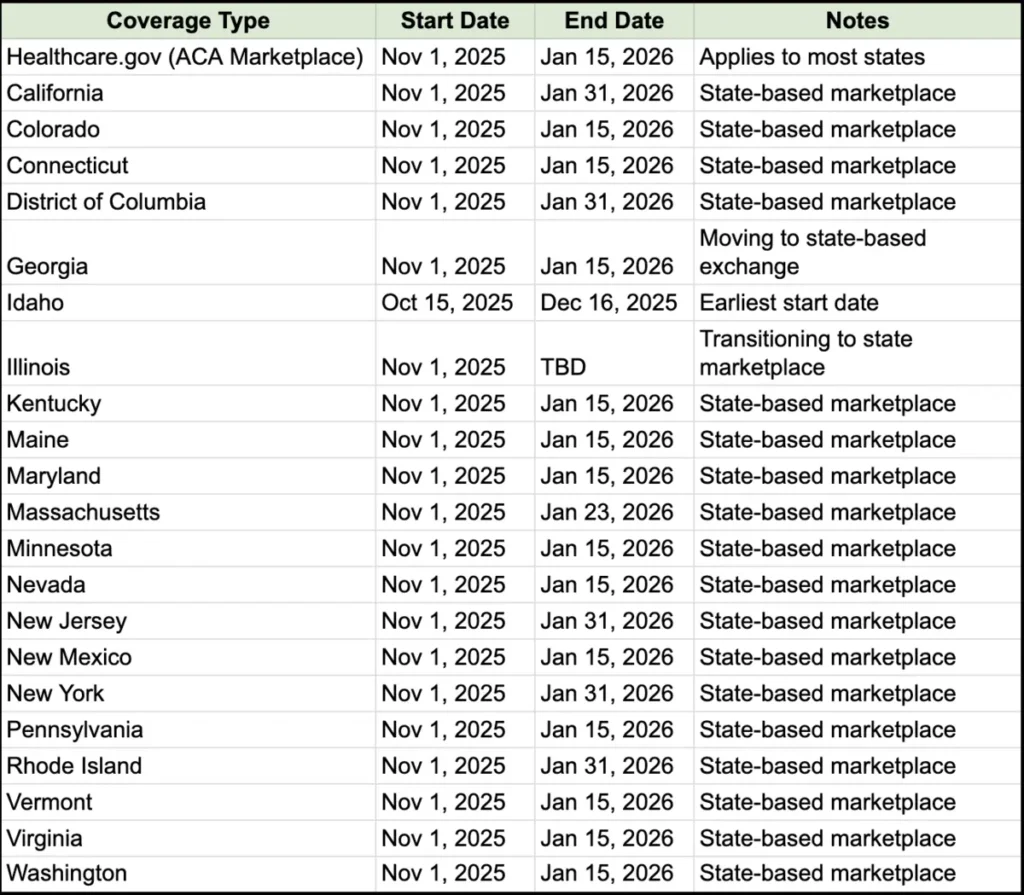
Employees who don’t rely on company coverage may look to the Affordable Care Act (ACA) Marketplace. The federal enrollment period for 2025 runs from November 1, 2024 to January 15, 2025. Some states that operate their own marketplaces, including California, New York, and Massachusetts, may offer extended deadlines. HR teams don’t administer these directly, but they should point employees to the right resources if they ask about non-employer coverage.
2. Medicare Open Enrollment
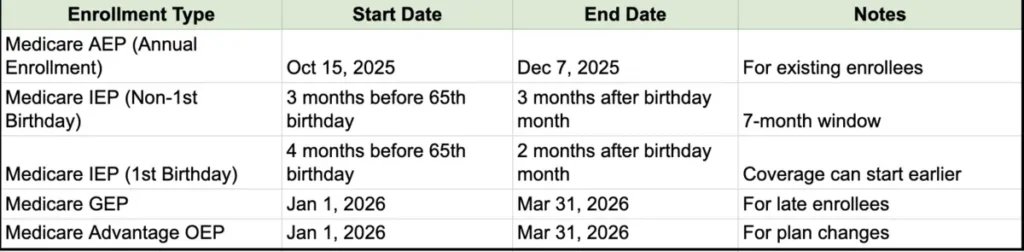
For employees nearing retirement or turning 65, Medicare enrollment guidance becomes essential. The Annual Enrollment Period (AEP) runs October 15 – December 7, 2024, during which employees can join, switch, or drop plans. Medicare coverage options include:
- Part A – Hospital insurance
- Part B – Medical insurance
- Part C – Medicare Advantage plans
- Part D – Prescription drug coverage
3. Medicaid and CHIP
Unlike employer or ACA plans, Medicaid and the Children’s Health Insurance Program (CHIP) allow year-round enrollment. HR teams should be prepared to guide eligible employees toward state-specific resources, especially for those in low-income households, pregnant employees, or those with dependents.
Key Open Enrollment Dates for 2025–2026
ACA Marketplace (Federal & State-Based Plans)
Employer-Sponsored Plans

Medicare Enrollment Periods
Medicaid & CHIP

HR should communicate these dates clearly and early to avoid missed deadlines.
Struggling with Open Enrollment Questions Overload?
Every year, HR teams spend countless hours answering the same benefits questions, chasing deadlines, and fixing enrollment errors. This administrative burden pulls focus away from strategy and leaves employees frustrated.
With Winslow, you can automate benefits Q&A, send deadline reminders, and provide personalized plan guidance, all within Slack, Teams, or email. Employees get instant clarity, and HR teams reclaim their time.
How Employees Can Get Health Insurance if They Miss Open Enrollment

Missing the open enrollment 2025 deadline doesn’t always mean employees are left without options. Certain qualifying life events (QLEs) create a Special Enrollment Period (SEP), which allows individuals to enroll in or modify their benefits outside of the standard window.
Common Qualifying Life Events
Household changes
- Marriage
- Divorce or legal separation
- Birth, adoption, or foster care placement of a child
- Loss of coverage due to the death of someone on the plan
Changes in residence
- Moving to a new ZIP code, county, or state
- Returning to the U.S. after living abroad
- Relocating for school, seasonal work, or a shelter
Loss of health coverage
- Losing existing coverage within the past 60 days
- Expecting to lose coverage in the next 60 days (e.g., job loss or aging out of a parent’s plan)
Other significant events
- Gaining U.S. citizenship
- Release from incarceration
- Starting or ending service as an AmeriCorps, VISTA, or NCCC member
- Missing open enrollment due to a natural disaster or other uncontrollable event
- Starting a new job that provides employer-sponsored health insurance
💡 For HR teams: It’s essential to educate employees about SEPs during benefits communications. Employees may not realize these exceptions exist, and timely action is critical as most SEPs are limited to 30–60 days after the event.
Resources: Medicare.gov and HealthCare.gov provide eligibility tools employees can use to confirm SEP qualification.
Best Practices for HR Teams to Prepare for Open Enrollment 2025

1. Pre-Enrollment Preparation
The success of open enrollment depends on what HR teams do before it even begins. Early preparation reduces confusion and ensures employees have accurate, up-to-date information.
Key actions to take:
- Review benefits utilization: Look at last year’s enrollment data. Which plans were popular? Which were underused? This helps identify gaps in communication or plan design.
- Coordinate with vendors: Confirm plan details, rates, and changes with insurance carriers before announcing them to employees.
- Plan the calendar: Share enrollment dates, deadlines, and milestone reminders 6–8 weeks in advance to give employees time to prepare.
Related: How HR Chatbots Are Transforming Employee Benefits Sites
2. Communication Strategy
Employees cannot make informed choices if they do not fully understand their options. A strong communication plan is critical for success.
How HR teams can improve communication:
- Use multiple channels such as email, Slack or Teams, intranet posts, and even physical posters in common areas.
- Segment communication. For example, employees nearing retirement may need reminders about Medicare, while parents may focus on dependent coverage.
- Avoid jargon. Instead of describing plan tiers in technical terms, use relatable scenarios. For example: “A family with children in daycare could save an average of $2,000 a year by using the Dependent Care FSA.”
Related: AI HR Chatbots vs. Traditional HR Tools: Why the Future of HR is Chat
3. Employee Education and Support
Open enrollment is overwhelming for many employees. HR teams can reduce anxiety by making information simple, accessible, and interactive.
Employee support tactics:
- Provide side-by-side plan comparison charts.
- Offer cost calculators to help employees project annual expenses.
- Host live or virtual Q&A sessions to walk through benefits.
- Use AI HR chatbot or knowledge bases so employees can get answers instantly, without waiting on HR.
Related: How Are HR Chatbots Transforming Employee Support and Efficiency in 2024?
4. Compliance and Documentation
HR teams must ensure open enrollment communication is not only clear but also legally compliant.
Checklist for compliance:
- Verify that all benefits comply with ACA, ERISA, and HIPAA regulations.
- Provide required documents such as the Summary of Benefits and Coverage (SBC).
- Keep copies of employee communications to show compliance in case of audits.
5. Post-Enrollment Follow-Up
Open enrollment does not end when employees hit “submit.” Following up ensures the process continues to deliver value.
Post-enrollment actions:
- Send a thank-you message and confirmation of employee choices.
- Run a short survey to collect feedback on what worked and what was confusing.
- Report to leadership with insights on participation rates, projected costs, and employee feedback.
Keep a support channel open for claims and coverage questions throughout the year.
How to Simplify Open Enrollment with HR Chatbots
Open enrollment often overwhelms HR teams with repetitive questions and high volumes of employee requests like:
- “Which plan covers my dependents?”
- “What’s the difference between HSA and FSA?”
- “When is the open enrollment 2025 deadline?”
Here’s how HR teams can use HR chatbots to manage open enrollment more smoothly:
Answer Benefits FAQs Instantly
Employees often ask the same questions: “When does enrollment close?” or “Is my spouse eligible for coverage?” Chatbots can handle these queries 24/7, freeing HR teams from answering them repeatedly.Guide Employees Through Plan Choices
Chatbots can explain differences between plans in plain language, highlight costs, and link employees to comparison charts. This helps employees make informed choices without waiting for HR assistance.Personalize Responses
Integrated with company policies, chatbots can tailor answers based on employee role, location, or eligibility. For example, they can remind a part-time employee which plans they qualify for.Automate Reminders and Deadlines
Employees can receive chatbot nudges when enrollment opens, before deadlines, or if they have incomplete submissions. This reduces the risk of missed deadlines.Collect Insights for HR Teams
Chatbots track the most common questions, giving HR visibility into confusing policies or unclear plan documents. This data helps improve future communications.
Frequently Asked Questions (FAQs)
1. What happens if I do nothing during open enrollment?
If employees take no action, most employer-sponsored health plans automatically roll over their current coverage into the next year. However, they may miss the chance to update dependents, adjust coverage, or enroll in new benefits like FSAs or HSAs. HR teams should remind employees that “no action” could also mean missing out on new offerings.
2. How long is open enrollment in Colorado?
For 2025, Colorado’s state-based marketplace open enrollment runs November 1, 2025 – January 15, 2026. Employer-sponsored enrollment periods in Colorado vary by company, usually lasting 2–4 weeks in the fall.
3. What happens if you miss your enrollment?
If an employee misses open enrollment, they generally cannot change benefits until the next cycle unless they qualify for a Special Enrollment Period (SEP) triggered by a life event (marriage, birth, job change, etc.). HR teams should be prepared to explain these exceptions and guide employees to alternative coverage options.
4. What is the meaning of late enrollment?
Late enrollment typically refers to enrolling in health benefits after the official enrollment window has closed. In some cases (like Medicare), this may result in penalties or higher premiums. For employer plans, employees may be locked out until the next enrollment period unless they experience a qualifying event.
5. What happens after enrollment?
After open enrollment ends, employees receive confirmation of their benefit selections. Coverage typically begins January 1, 2025 (for calendar-year plans). HR teams should send confirmation notices and provide a support channel for employees with questions about claims or coverage.
5. What does ‘enrollment cancelled’ mean?
Enrollment can be canceled if an employee fails to complete required steps, misses deadlines, or voluntarily withdraws their selection. HR teams should verify cancellation reasons and advise employees on next steps, whether that means re-enrolling during the current window or waiting until the next period.
6. When is Open Enrollment for health insurance 2025?
- Employer-sponsored plans: Typically Oct–Nov 2024 (dates vary by employer).
- ACA Marketplace (federal): November 1, 2024 – January 15, 2025.
- Medicare Annual Enrollment Period: October 15 – December 7, 2024.
7. What is the Open Enrollment 2025 deadline
The federal ACA marketplace deadline is January 15, 2025. For employer plans, deadlines vary but typically fall in late October or November 2024. Medicare deadlines end December 7, 2024 for the Annual Enrollment Period.
8. What is the Open Enrollment 2025 period for UnitedHealthcare?
For employees with UnitedHealthcare, the open enrollment period aligns with either their employer’s schedule (for employer-sponsored plans) or the federal/state marketplace window (Nov 1, 2024 – Jan 15, 2025, in most states).
Make Open Enrollment Easier for Everyone
Give employees instant answers and reduce repetitive work for HR teams with Winslow’s AI-powered chatbot.