
When an employee resigns, the real work doesn’t end with their departure notice. HR professionals must manage the transition smoothly, safeguard institutional knowledge, and ensure compliance with internal and legal procedures. Stats show that 71% of organizations have no formal offboarding process.
A crucial but often overlooked part of this process is writing a good resignation acceptance letter—an official document acknowledging and formalizing an employee’s intent to leave.
It may sound simple. But what happens if it’s vague, delayed, or missing key information? You risk confusion, legal gaps, or strained relationships, none of which your team can afford.
What Is a Resignation Acceptance Letter?
A resignation acceptance letter is a formal response from the employer, typically issued by HR or the reporting manager, to acknowledge that an employee’s resignation has been received, reviewed, and accepted. It outlines the last working day, next steps for offboarding, and often includes appreciation for the employee’s contributions.
Why Is a Resignation Acceptance Letter Important?
The letter serves several crucial functions:
- Documentation: It acts as official proof that the employer accepted the resignation.
- Clarity: It confirms critical details like final work dates, notice periods, or transition tasks.
- Professionalism: It maintains a respectful and professional tone during the exit process.
- Compliance: It supports HR policies and legal standards around employee exits.
When Should You Send a Resignation Acceptance Letter?
Ideally, within 24 to 48 hours after receiving the resignation email or letter. Quick acknowledgement demonstrates professionalism, helps employees plan their transition, and gives HR teams enough time to initiate offboarding procedures.
Related: Employee Experience: What is it and Ways to Improve it?
Key Elements of a Resignation Acceptance Letter
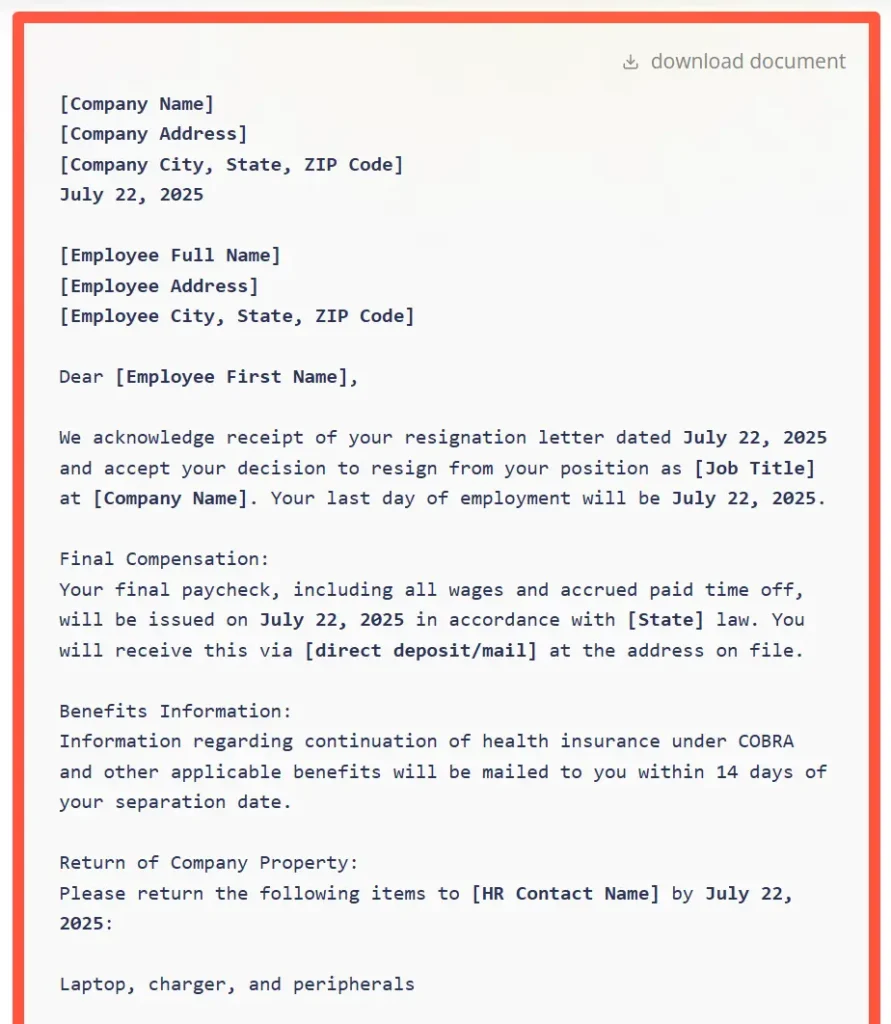
A clear, well-written resignation acceptance letter template or format should include:
Employee’s full name and job title
Date of resignation (when it was received)=
Last working day (as per notice period or mutual agreement)
Acknowledgement of resignation
Appreciation for service
Instructions or next steps (exit formalities, handovers)
HR or manager’s contact info for questions
Company letterhead or digital signature (if shared via PDF)
How to Write a Resignation Acceptance Letter (Step-by-Step Guide)

Let’s break it down into actionable steps.
1. Acknowledge Receipt Clearly
Start by stating that the employee’s resignation has been received and accepted. Include the date it was submitted and confirm that it’s being processed.
Example:
We acknowledge receipt of your resignation letter dated July 15, 2025, and confirm that your resignation has been accepted.
2. Confirm Last Working Day
This prevents ambiguity. State the final date of employment based on the notice period or agreed-upon timeline.
Example:
Your last working day will be August 15, 2025, following your notice period and in accordance with company policy.
3. Add a Statement of Appreciation
Even if the departure is not ideal, it’s best practice to thank the employee for their contributions. This helps maintain goodwill and supports a positive offboarding culture.
Example:
We appreciate your contributions to the Product Marketing team and thank you for your efforts over the past two years.
4. Outline Any Exit Procedures
Mention whether any handovers, exit interviews, or documentation will be required.
Example:
Please ensure that all project handovers are completed by August 10 and connect with the HR team to complete your exit formalities.
5. Provide a Point of Contact
Let them know who to reach out to for any final queries, especially around payroll, benefits, or exit paperwork.
Example:
Should you have any questions regarding your final settlement or exit process, please reach out to Sarah Johnson in HR at [email protected].
6. Close Professionally
Avoid overly emotional language. A concise closing line shows professionalism and helps maintain boundaries.
Example:
We wish you the best in your future endeavors.
Don’t want to start from Scratch?
Common Mistakes to Avoid in Your Resignation Acceptance Letter?
Avoid these mistakes to keep the process compliant and professional:
- Delaying the response to resignation letters
- Using informal language or emotional tone
- Leaving out exit details like the final working day
- Failing to mention handover or offboarding steps
- Sending without internal approval from reporting managers or HR heads
Generate HR Letters Instantly with Winslow
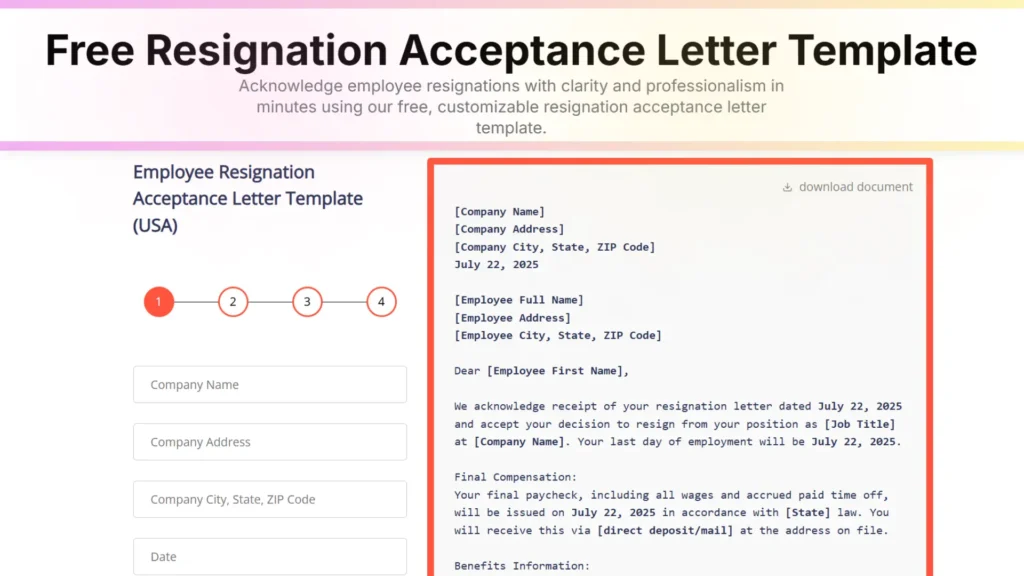
Manually drafting resignation acceptance letters—and other HR documentation—can take hours every month. Winslow simplifies it.
With Winslow, your HR team can:
✅ Instantly generate accurate resignation acceptance letters using company policies
✅ Auto-fill names, dates, and designations
✅ Customize tone and format as per role or seniority
✅ Maintain a consistent, compliant paper trail
Frequently Asked Questions
1. Is a resignation acceptance letter mandatory?
While not always legally required, it’s strongly recommended for documentation and clarity.
2. Who should sign the resignation acceptance letter?
Usually, an HR manager or the employee’s direct supervisor.
3. Can an email be considered a resignation acceptance letter?
Yes, as long as it includes all the key elements and is written professionally.
4. Should the letter mention severance or benefits?
Not always—those are usually covered in separate documentation, but you can mention follow-ups with HR.
5. What if the employee doesn’t serve their full notice period?
A resignation acceptance letter can still be issued with updated terms; be sure to document this clearly.
Conclusion
A resignation acceptance letter template isn’t just a formality; it’s an essential part of a compliant and professional offboarding process. By standardizing your process and using smart HR templates, your team can respond faster, reduce risk, and maintain strong employee relationships even through transitions.
Got Your Template? Now, Automate the Follow-Ups with Winslow
Winslow’s HR chatbot answers offboarding questions instantly using your SOPs and policies, so HR stays focused on what matters.