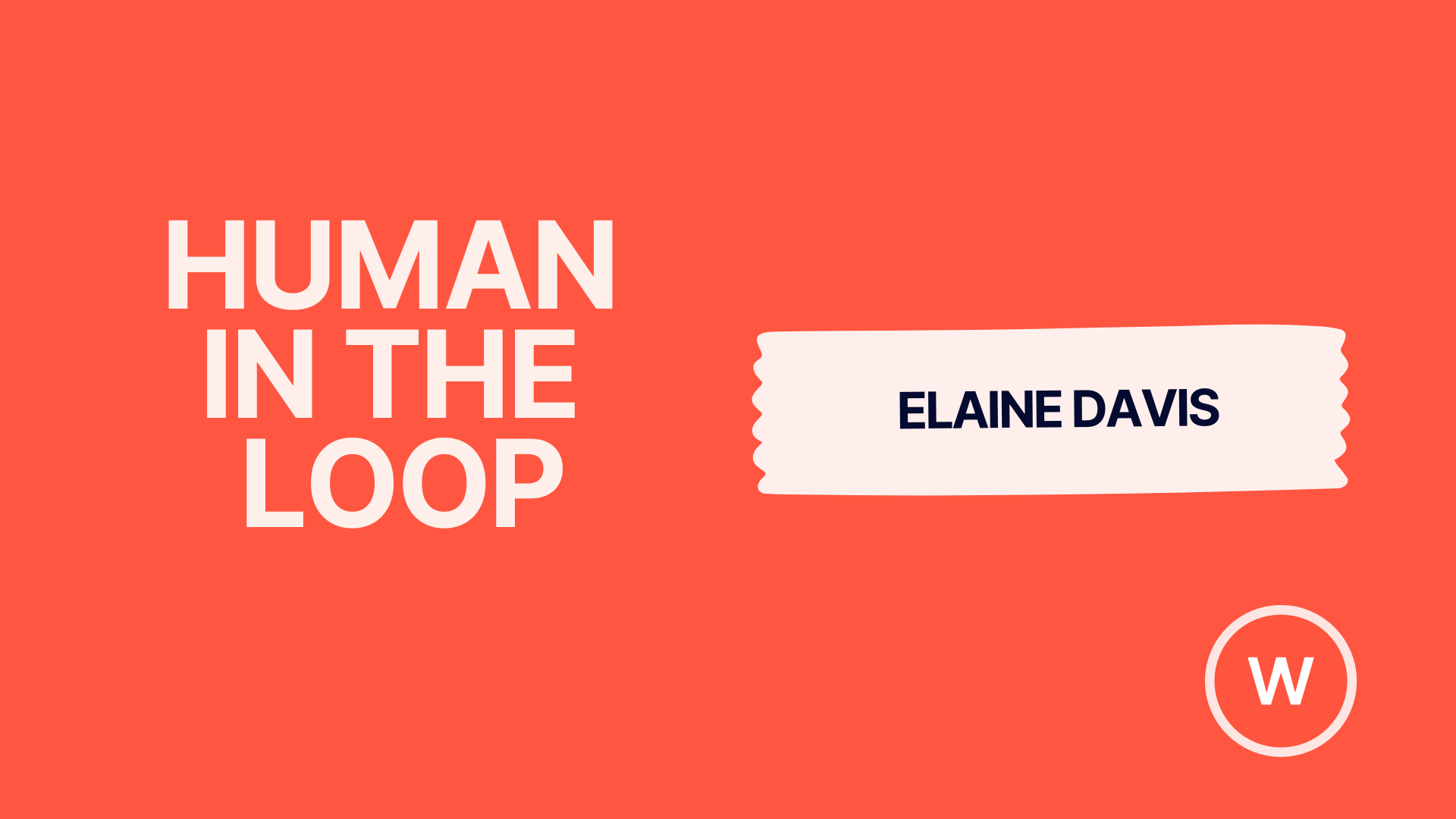
Elaine Davis never planned on a career in HR. She wanted to be a vet. Then a lawyer. Then a technologist. But somewhere between a master’s in computer science and a job at Bank of America, she realized she could do the most good by applying technology to people problems. HR just happened to be the door.
In this candid conversation with Winslow CEO Niel Robertson, Elaine, now CHRO at Motive Health, talks through why HR shouldn’t wait for permission, how AI is changing the function, and what it really means to lead with tech. Here’s a lightly edited excerpt from their discussion.
You’ve always said you didn’t start your career trying to be in HR. So how did you end up here?
Elaine: I really didn’t want to be in HR. I wanted to be a vet, then a lawyer, and then I studied computer science. But once I got into big enterprise environments, I realized I loved solving people problems with technology. I started building systems at Bank of America for open enrollment and benefits, and over time the scope of my work just kept expanding. Eventually, I looked around and realized I had become an HR person.
One thing that always stuck with me is your belief that HR doesn’t need to ask for permission to lead. Can you talk more about that?
Elaine: Yeah. I think HR sometimes waits to be invited to the conversation. But here’s the truth: CHROs own the two biggest line items on the P&L—salary and healthcare. That’s real power. I always make best friends with the CFO and CIO right away. I don’t show up asking for perks. I show up with data, a business case, and a model that speaks their language. That relationship lets me make the case for bigger, more strategic work.
A lot of HR leaders are hearing the AI drumbeat loud and clear, but they don’t know where to start. What do you recommend?
Elaine: Start with what you already know: your org structure. Building and maintaining a job family architecture is already a core HR responsibility. So use that foundation to think through how AI fits. Which jobs could be partially or fully supported by AI? Where can automation help scale your team’s impact? Even just labeling roles as “AI-hybrid” or “AI-ready” helps teams reframe the conversation. It’s not about eliminating people, it’s about redesigning the work to match the tools available.
You’ve said before that HR and IT shouldn’t be separate functions anymore. Why is that?
Elaine: Because AI forces the two functions together. I’ve never understood the divide, honestly. My entire career, I’ve worked side by side with IT to get things done. These days, HR is often bringing the first real AI use case into the company—automating answers to employee questions, simplifying workflows, and integrating with systems. That means HR needs to be tech-fluent and ready to partner, not wait.
You’ve also made the point that AI success depends on what you feed it—that content matters more than ever.
Elaine: Totally. People don’t read 20-page guides. They skim. They search. They ask questions. And AI tools respond best when the source content is written clearly and directly. We need to stop producing glossy brochures and start writing for the robot. That means building content that’s structured, concise, and designed to be interpreted by a machine, then letting the machine explain it back to humans.
There’s also this shift from specialists to generalists. What are you seeing there?
Elaine: For the last hundred years, we’ve built organizations around increasing specialization. But AI changes that. When machines can do the niche stuff—the calculations, the lookups, the repetitive tasks—humans can take on broader scopes. I see payroll and benefits roles starting to blend. HR generalists are becoming more strategic. And it means org design will need to evolve, too. We’re heading back toward generalization, but this time with AI as a co-pilot.
Final word for HR leaders reading this?
Elaine: Claim your leverage. You already have it. Don’t wait for someone to hand you permission. Pick a place to start, even if it’s small. Map your org. Tag your jobs. Learn how to write for AI. Talk to your CFO. Talk to your CIO. This is the moment. Don’t miss it.
Want help finding your first HR AI use case? Winslow makes it easy to get started with AI by automating the repetitive HR questions your team gets every day. Learn more at usewinslow.com.
Watch the full conversation with Niel and Elaine below